
🚨 THE ALARM
Picture this: Your 18-year-old packs for college with everything they need—except the ability to think without AI. They've been using ChatGPT for homework, asking AI for relationship advice, and letting algorithms decide what to watch, eat, and buy. Now they're heading into complete independence with zero oversight. No parent looking over their shoulder. No limits on screen time. No one questioning whether they should ask AI to write their college essays, make their class schedules, or navigate their social problems. Your teen is about to face four years of adult decisions with the decision-making skills of someone who's been outsourcing their thinking to machines. And you don't even know it's happening.
🔍 THE PROBLEM: Total AI Dependency Without Oversight
As a CISSP with 20+ years in cybersecurity AND as a parent of three grown children, I've seen what happens when teens transition to college without AI self-regulation skills. It's not just about academic integrity—though that's catastrophic enough. It's about neural pathway development that stops happening when AI does the thinking.
When your teen hits college without AI boundaries, they don't suddenly develop critical thinking skills. They double down on AI dependency because it's easier, faster, and there's no parent saying "figure it out yourself." This creates emotional dependency disguised as help. They use AI for everything: course planning, roommate conflicts, career decisions, even dating conversations.
The consequences compound rapidly. Their professors don't know they're using AI for assignments that should build analytical skills. Their career counselors don't realize AI is choosing their major. Their friends don't know AI is writing their text messages. Your teen becomes a human interface for artificial intelligence—not an independent adult.
This isn't like previous technology concerns. Social media addiction was visible—you could see them scrolling. AI dependency is invisible progression. Your teen appears productive, engaged, successful. But they're not developing the mental muscles they need for adult life. They're developing AI coordination skills instead of independent thinking.
The window for teaching AI self-regulation closes at 18. Once they're on campus, you've lost your chance. What you send to college is what you get back—either an independent thinker or someone who has transferred their trust from human guidance to algorithmic replacement.
✅ YOUR SOLUTION: Age 17-18 Transition Protocol
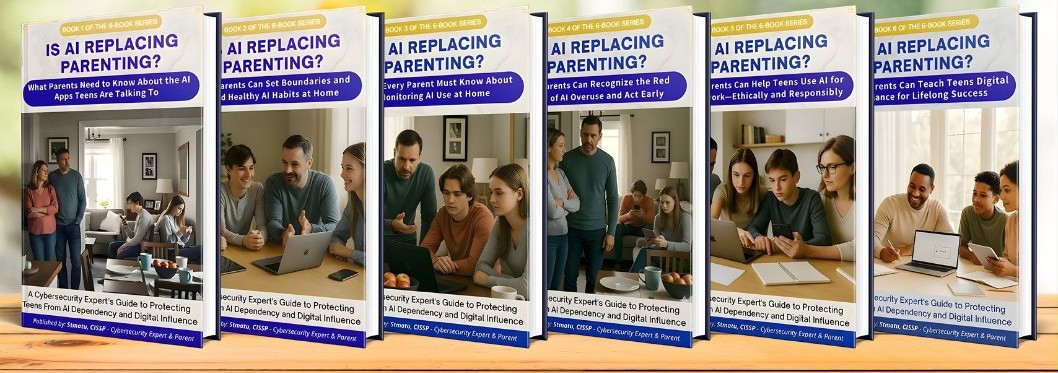
Here's my framework from "Is AI Replacing Parenting?" Book 2: The Age 17-18 Transition Protocol. This three-step system prepares teens for independent AI decision-making before they leave your oversight.
Step 1: AI Audit and Declaration. Sit down with your teen and map every AI tool they currently use—ChatGPT, character AI, recommendation algorithms, everything. Make them declare their usage honestly. Then categorize each use as "helpful tool" or "thinking replacement." Homework help becomes thinking replacement. Research assistance stays helpful tool.
Step 2: Graduated Independence Practice. Give your teen six months of practicing AI independence while still under your roof. Set "AI-free zones" for specific activities: college applications, job interviews, relationship decisions. Let them struggle through these decisions without AI assistance while you're still available for human guidance.
Step 3: Emergency Protocol Establishment. Before they leave for college, establish clear protocols for when AI use has gone too far. Create specific warning signs they can recognize in themselves: Can't make decisions without asking AI, feeling anxious when AI isn't available, letting AI override their instincts consistently.
🎯 THE BOTTOM LINE
Your teen is about to face adult life with either independent thinking skills or AI dependency habits. There's no middle ground. College will either strengthen their decision-making abilities or cement their reliance on artificial intelligence for every choice. The Age 17-18 Transition Protocol is one of twelve protective strategies in my 6-book series designed specifically for parents facing this invisible crisis. Your teen needs you to prepare them for AI independence—not AI optimization. Start protecting their decision-making capacity today by exploring the complete framework in "Is AI Replacing Parenting?" Book 2.
Parent Insight: The hardest part of parenting teens isn't protecting them from bad decisions—it's ensuring they develop the capacity to make good decisions independently.